
Damián Ruiz
Introductory Prologue to the Seminar–Lecture delivered on February 27 at ISCREB in Barcelona by Damián Ruiz, General Health Psychologist (COPC) and Jungian Analyst (member of the Jung Institute of Barcelona and the IAAP)
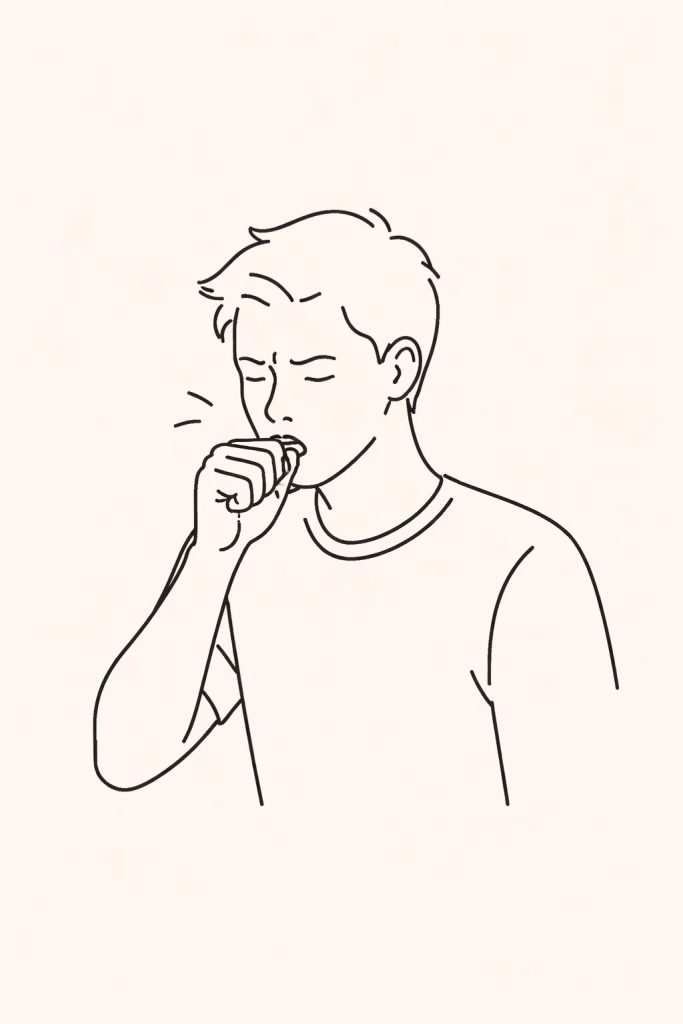
Let us imagine that a person begins to cough.
The cough may be mild and temporary, as in the case of a common cold. It may be dry and irritating, resulting from allergies or environmental pollution. It may be productive, accompanied by mucus, indicating a respiratory infection. It may be persistent and chronic, as in asthma or chronic obstructive pulmonary disease. It may signal the onset of pneumonia. It may be a symptom of gastroesophageal reflux. In more serious cases, it may be the first sign of tuberculosis or even lung cancer.
In all these cases, the cough is not the disease. It is the symptom.
It is the visible manifestation of an underlying organic process. A responsible physician does not simply suppress it without further inquiry. They question its origin, investigate its cause, and examine the clinical context. The cough is a signal. The objective is not to silence the signal, but to understand what is producing it.
Now let us imagine a different scenario.
Suppose that medical institutions, political organizations, and the healthcare system decided to invest all their resources exclusively in making the cough disappear. Powerful antitussive drugs are developed. Effective protocols are created to reduce the cough reflex. Studies are published demonstrating a statistical decrease in coughing episodes across the population.
Some professionals succeed in eliminating the cough in most patients, regardless of its origin. An academic, institutional, and economic movement emerges in support of those who have “cured the cough.”
But the pulmonary, infectious, or inflammatory problem underlying it remains intact.
Some patients will later develop complications. Others will learn to live with the underlying cause as long as the cough is controlled. Statistics will show symptomatic success. However, the root of the problem will not have been addressed.
This scenario, which would be unacceptable in medicine, is strikingly familiar in the field of obsessive-compulsive disorder.
OCD is a symptom. Beyond a possible genetic predisposition, it often emerges in the context of traumatic, stressful, or disorganizing circumstances, whether acute or prolonged, frequently during childhood or adolescence. Obsessions and compulsions constitute the visible manifestation—the tip of the iceberg—of a psychic structure that has been organized around fear, insecurity, and the need for control.
The obsessive symptom is not the essential problem. It is the expression of a deeper conflict.
However, what is widely validated at present is the reduction of the symptom: eliminating the “cough” or learning to manage it in the most functional way possible. What often remains in the background is the question that in medicine would be mandatory: what is producing this cough? What underlying process is generating the symptom?
In the psychological domain, the equivalent question would be: what psychic structure, what early experiences, what relational and symbolic configurations have given rise to the appearance of obsessions and compulsions?
It is striking that what would never be permitted in medicine—ignoring the organic cause of a symptom and limiting intervention to its suppression—can be considered sufficient in psychology.
The cough is not the disease.
OCD is not the root of the conflict.