
Transformation
Damián Ruiz
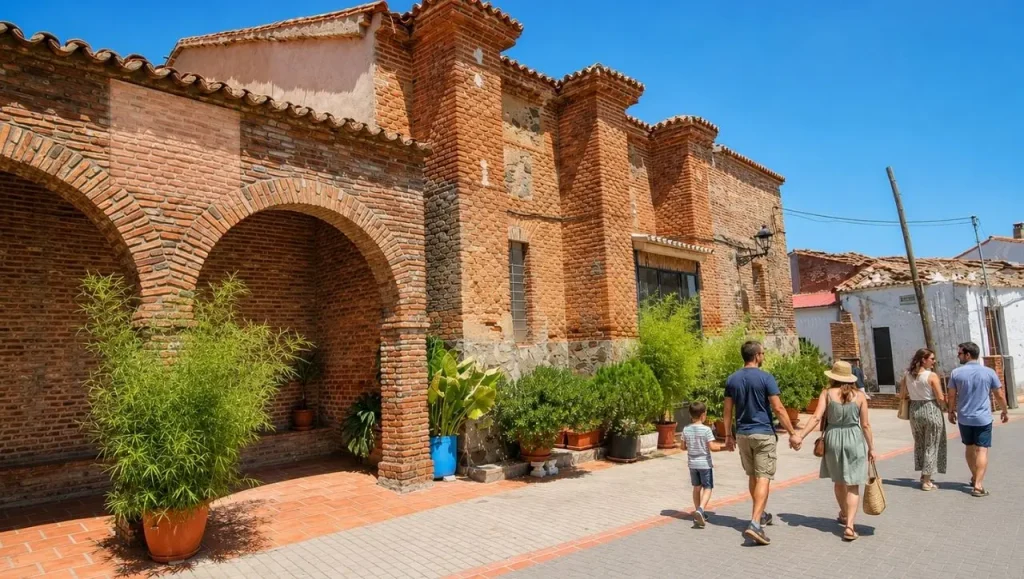
On Monday, 3 August, I received a call in the morning telling me that my father — eighty-eight years old and living in Castilblanco, the village in Extremadura, in the province of Badajoz, where he had been born — had died. For some time, he had been living with a relatively mild form of Alzheimer’s, which still allowed him to have pleasant conversations about the past and to recognise people from his village; his short-term memory, however, had ceased to exist some time ago. He died in his sleep. It was a gentle death.
The loss of a father — my mother died almost thirty years ago — gives rise to many reflections. I am someone who conceives of life and death as a continuum, and I believe that, once old age has been reached, the best thing is to leave gently, peacefully, and to pass lightly into that other dimension in which we believers find our consolation, even though perhaps it is merely a fantasy that keeps us away from a certain sense of emptiness.
Ours was never an easy relationship, although it was a loyal one.
When someone we love dies, a reconstruction of that person begins in the memories of those who were close to them and knew them.
I consider myself a warm person, though more rational than emotional, and I try to form as accurate an idea as possible of who my father was — his light and his shadows, as we all have — and to understand him on a deeper level than we managed to understand one another during his lifetime.
The funeral was deeply emotional. The village created a warm, affectionate and respectful atmosphere; there were rituals and religious hymns and, somehow, I understood that he had departed honoured — something that should always happen, because life is not easy and fighting one’s way through it is an arduous task.
Tradition is made up of the roots that sustain us and allow us to rise in every aspect of life. To destroy it, as some seek to do, is a way of leaving people without anything to hold on to. Afterwards, each of us decides how to live that tradition and how much time and importance to give it.
My open view of existence makes tradition the ground on which I stand, although my interests, I admit, lie elsewhere.
Two weeks later, my wife and I travelled to Berlin, on a trip that had been planned for some time. It was a complete immersion in contemporary art — eight exhibitions — which, together with psychology, has become the subject to which I devote most of my time, not only through creative processes but also through reading, documentaries and visits to exhibitions.
Berlin, the European capital with the youngest average population, is a hive of innovation, creativity, conceptual radicalism and avant-garde culture. Trams, underground trains, long walks as we travelled between the different museums, galleries and factories housing every kind of work: from those that astonish you to those that make you think only a highly narcissistic curator could have decided to exhibit them. Even so, the process of opening the mind, the disruption involved in such a journey, helps us to understand what Kandinsky meant when he said that “art goes beyond its time and carries a part of the future within it.”
Even when faced with an apparently stupid work, I try to observe it carefully because perhaps what I am unable to recognise consciously is being recognised by my unconscious at another level.
I have an aesthetic view of life, but art today is, above all, conceptual, and creating a “beautiful” work is almost a contemporary sin. Indeed, if a work is beautiful, its beauty must be properly justified, because the chances of its being dismissed by both experts and the public are fairly high.
To experience both Castilblanco and Berlin intensely, and with love, is a way of being fully present in life, recognising the importance of both tradition and modernity. It leads me to regard it as a serious mistake to see them as incompatible, or to seek to do away with one or the other, because each nourishes the other.
For a tree to bear fruit or flowers, it must have strong roots.
Damián Ruiz
Barcelona, August 2026
www.damianruiz.eu